Quantum pBac™

Virus-free, highly efficient piggyBac-based system for therapeutic gene integration with large payload capacity (up to 100 kb)
Stable, long-term expression of transgenes is often required in CGTs. Such prolonged expression can be accomplished by engineering the chromosomal DNA of cells either ex vivo or in vivo using viral or non-viral vector systems. For this purpose, virus-free DNA transposon systems, such as 先驅生醫的 Quantum pBac™ transposon-based system for genetic engineering, have emerged as highly promising vectors (Figure 2).

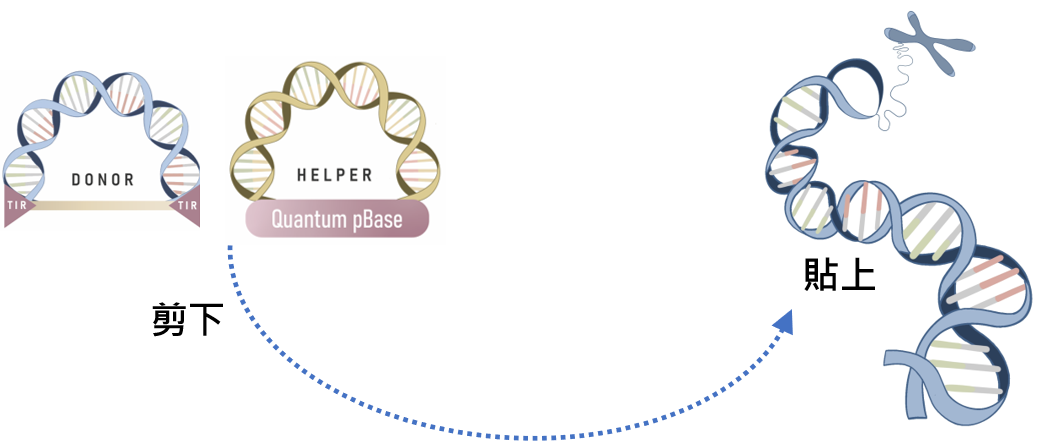
圖1. 我們的 Quantum pBac™ system for transposon-based gene integration consists of a DNA minicircle donor vector and the Quantum pBase transposon-encoding plasmid. Expression of the Quantum pBase transposase mediates cutting and pasting of the gene of interest (GOI) from the donor vector into chromosomal DNA.
Overcoming limitations of current viral vectors
Viral vectors (lentivirus and retrovirus) are commonly utilized to mediate chromosomal transgene integration in CGTs due to their high delivery efficiencies. However, viral vectors have several intrinsic limitations, including: (1) limited payload capacity; (2) immunogenicity of the viral vector; (3) preferential integration near or within active gene loci (potential genotoxicity); (4) silencing of genes with virus-mediated insertion; and (5) cost of GMP manufacture.
Non-viral vectors may be preferable to virus vectors for several reasons. For instance, virus-free vectors may have the capacity to mediate transfer of much larger DNA fragments than conventional viral vectors. Virus-free vectors may also be safer due to their lower potential for immunogenicity and genotoxicity. Finally, the manufacturing costs of virus-free vectors are typically much lower than those of viral vectors.

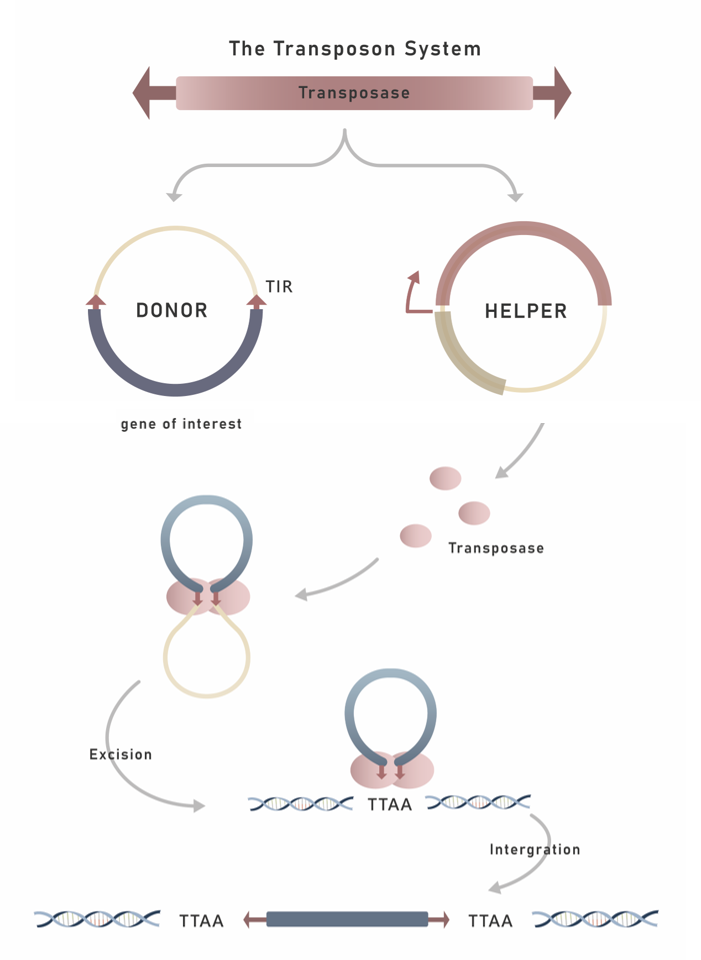
圖2. The most common implementation of transposon-based gene transfer systems for CGT involves co-transfection of two DNAs. The donor DNA contains a gene of interest (GOI) cassette flanked by TIRs, and the other DNA is a plasmid that expresses the transposase protein. The transposase excises the GOI from the donor vector and transfers it into chromosomal DNA. For piggyBac-based systems such as Quantum pBac™, the GOI is integrated into chromosomal DNA at TTAA sites. This two-DNA approach enables delivery of large payloads with minimal loss of efficiency.
As pioneers in virus-free gene therapy, our team was the first to demonstrate that piggyBac (isolated from cabbage moths) is the most promising DNA transposon system for gene therapy (Wu S et al.). Continuing this line of research, 先驅生醫 has leveraged the unique desirable features of the piggyBac system to create the best non-viral gene transfer system for CGTs. These efforts have yielded the potentially safer and more robust Quantum pBac™ system, which holds great potential for the generation of CAR T cells and other CGTs (Meir et al.; Meir et al.; Hua et al.).
Desirable attributes of Quantum pBac™ system: (1) Highest payload capacity among available gene therapy vectors (2) Capable of integrating genes with large sizes (3) Reversible engineering due to a lack of footprint (4) Potentially adaptable for site-specific integration (5) Able to integrate genes in nearly all mammalian cells
History of Quantum pBac™ in the context of CAR T cell therapy
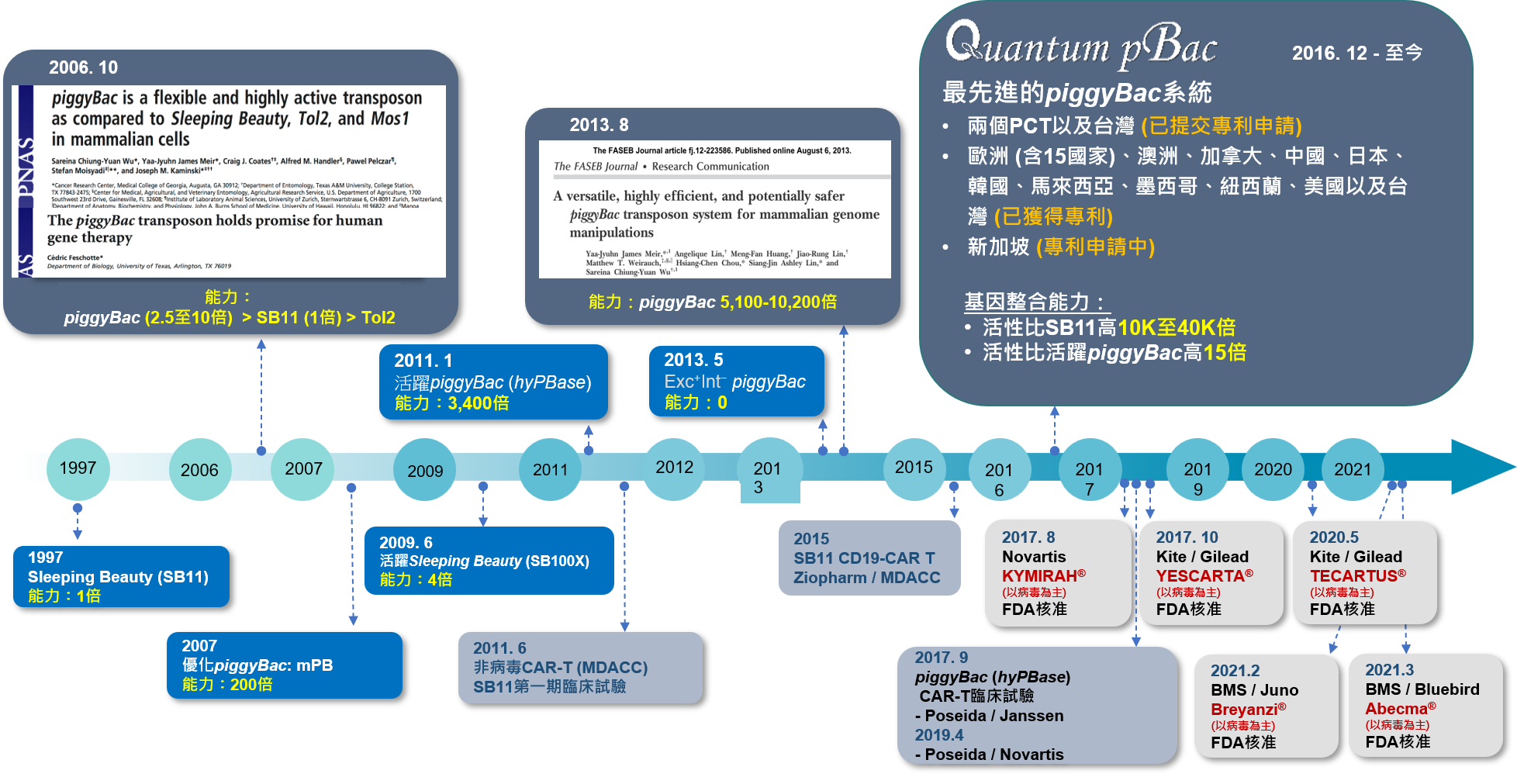
Quantum pBac™ was developed from piggyBac transposon systems in parallel with the development of the Sleeping Beauty transposon system and CAR T cells.

Figure 3. Time-line of Quantum pBac™ development in the context of transposon-based gene transfer systems and CAR T cell therapy. Hyperactive piggyBac and Sleeping beauty 11 (SB11) have been utilized to generate CAR T cell therapies in clinical trials. In terms of transposition efficiency, Quantum pBac™ 的轉座效率有超過 15-times more active than Hyperactive piggyBac and > 10,000-40,000-times more active than SB11. Approved CAR T cell therapies all use lentivirus or retrovirus for gene transfer. Next-generation CAR T cells for autoimmune and solid tumor indications will require large multiplex transgenes to improve safety and efficacy. Transposon-based gene transfer systems can integrate the largest genetic payloads into host cell DNA.
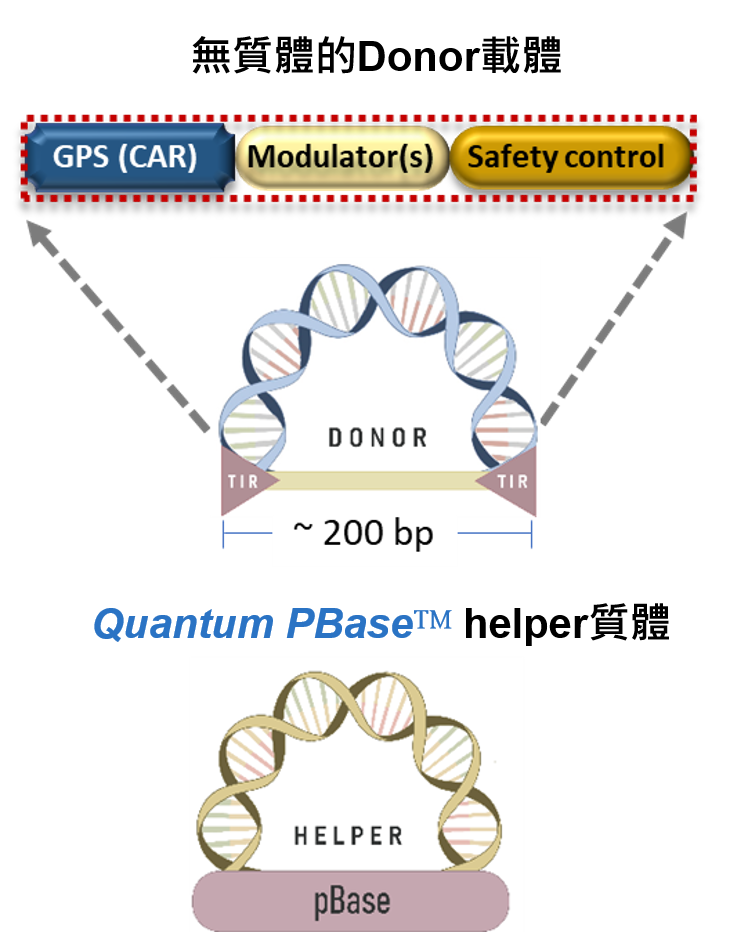
我們的 Quantum pBac™ system is comprised of two component DNAs, a donor vector and a helper plasmid. The use of minicircle DNA for the donor vector facilitates gene delivery, enhances gene integration, and ensures stable gene expression (Figure 4).

圖4. 我們的 Quantum pBac™ transposon-based gene transfer system consists of a minicircle donor vector and a helper plasmid. The minimized 200-bp donor vector backbone permits a large cargo capacity that can accommodate multiplex transgenes encoding different functional components, such as CAR genes, cellular or microenvironment modulators, and safety control elements. The minicircle donor vector has a large payload capacity and is capable of carrying sizable genes of interest. It also contains short terminal inverted repeats (TIRs) that enable safe and effective genetic engineering. Thus, the donor vector facilitates gene delivery and improves stability of gene expression. The helper plasmid encodes Quantum pBase transposase, which mediates integration of transgenes into the genome of therapeutic cells. This highly active and safer Quantum pBac™ system has major advantages over the Hyperactive piggyBac system, including (1) increased payload capacity & gene delivery rate (smaller donor vector); (2) much less residual vector DNA (0.1 kb vs hyPB 0.6 kb); (3) minimal enhancer and/or silencer activities in human T cells; (4) a potentially safer integration profile; and (5) increased (>15-fold in human T cells) integration efficiency.
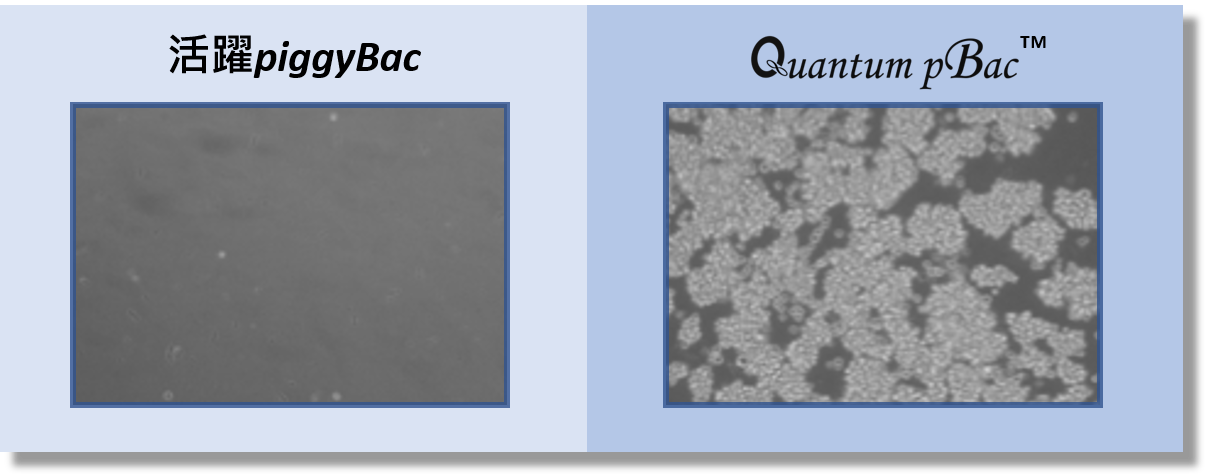
Notably, the Quantum pBac™ system is more efficient and potentially safer than Hyperactive piggyBac. The integration efficiencies were directly compared in Jurkat human T cells, revealing that Quantum pBac™ is much more efficient.

Figure 5. Gene transfer with Quantum pBac™ is more efficient compared to Hyperactive piggyBac. Jurkat cells were transfected with a hygromycin resistance gene carried by either Hyperactive piggyBac (left panel) or Quantum pBac™ (right panel). Images show drug-resistant (transfected) cells following hygromycin selection.
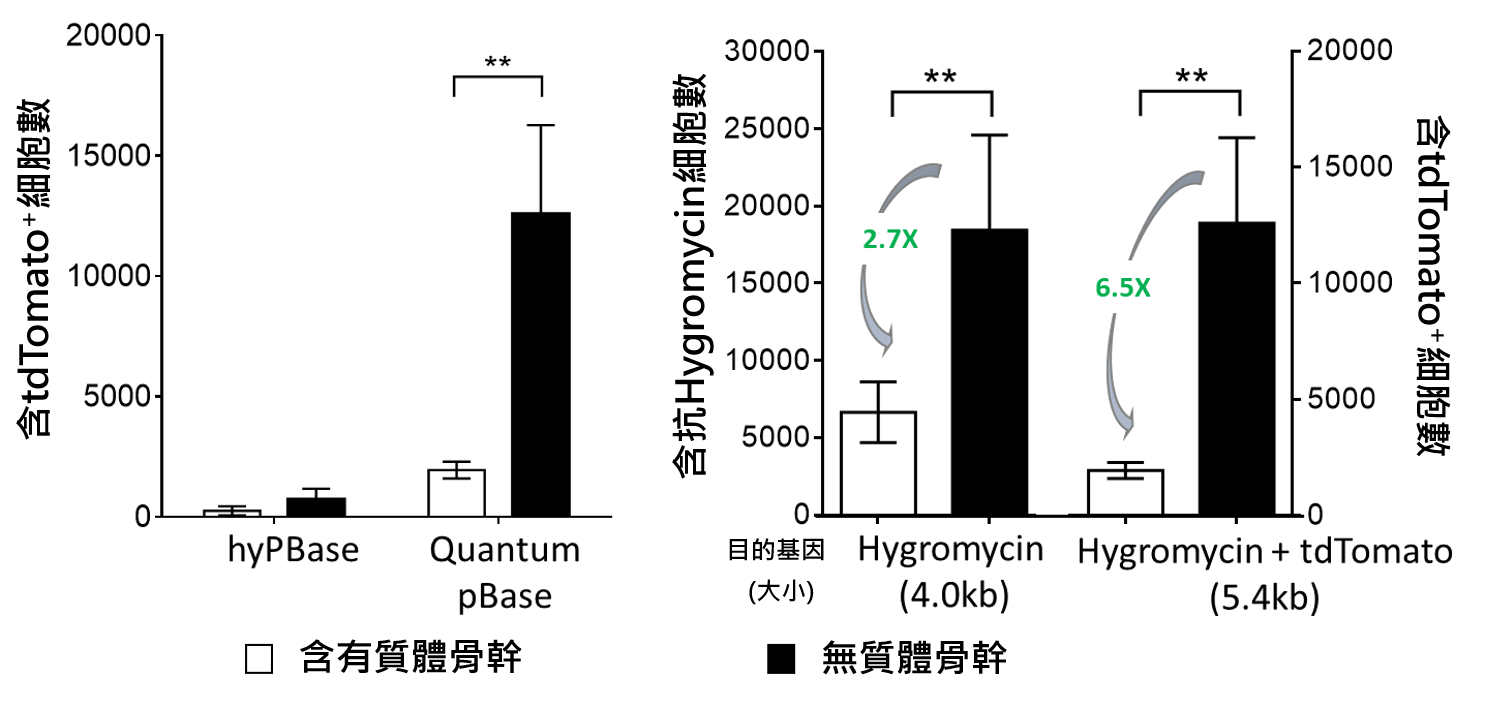
初代T細胞的轉座效率圖中顯示, Quantum pBase is much more efficient than hyperactive piggyBac transposase, hyPBase (see Figures 5 & 6). This high efficiency was further amplified by utilizing a donor vector without backbone plasmid components. The difference in transposition efficiency was also amplified when integrating a larger transgene (4.0 kb vs 5.4 kb; Figure 6).

Figure 6. Quantum pBase transposase is superior to Hyperactive PBase. Transposition activities of the indicated combinations were tested in primary T cells. Donor vectors had either plasmid-containing backbone or plasmid-free backbone. Transposases were encoded by either hyPBase or Quantum pBase plasmids. The donor vectors carried the same gene cassette for expression of tdTomato and hygromycin-resistance genes linked by IRES. Results are shown as mean ± SD. **p < 0.01. n = 3 (triplicate).
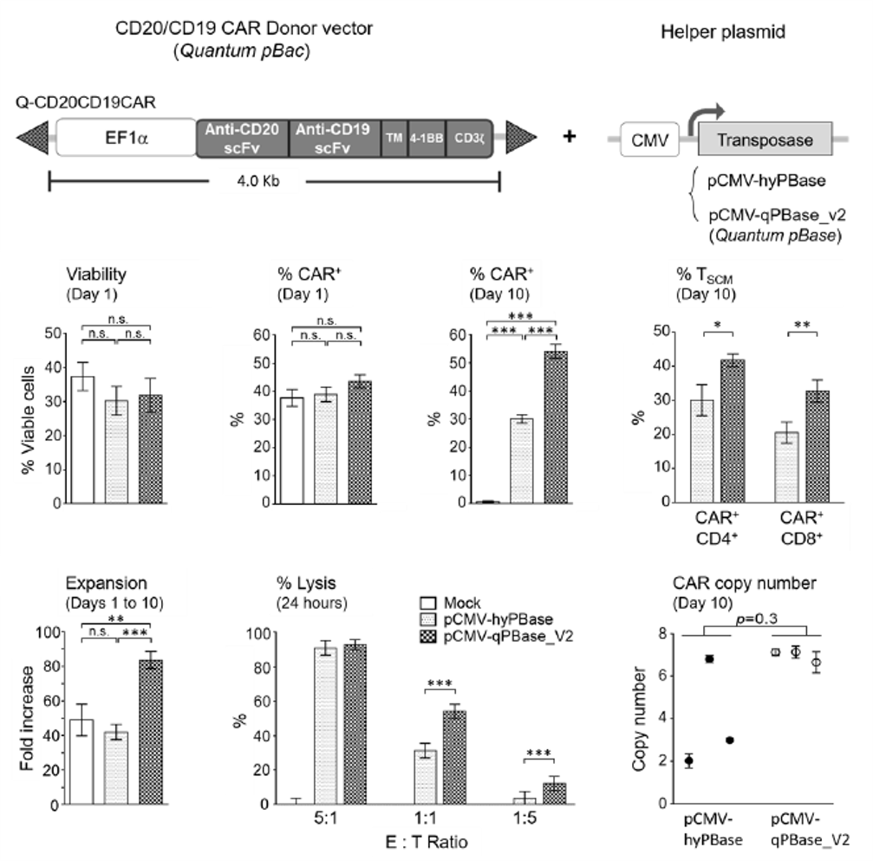
In addition to its best-in-class gene integration efficiency, Quantum pBac™ is preferentially yields therapeutically desirable cells. Since piggyBac-based systems are expected to preferentially transpose TSCM cells (the safest and most therapeutically efficacious T cell subset), both Quantum pBase and hyperactive PBase yield high percentages of TSCM cells; however, Quantum pBac™ yields an even higher proportion (Figure 7).